Kyanite-derived sintered mullite, refractory-grade kyanite, and high-purity fused silica — produced at the Bangalore plant on dedicated lines with lot-level QC and full batch traceability.
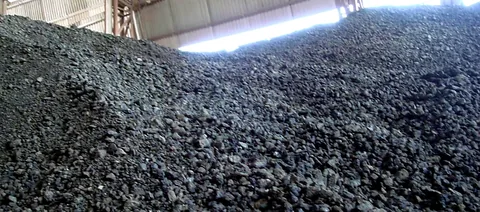
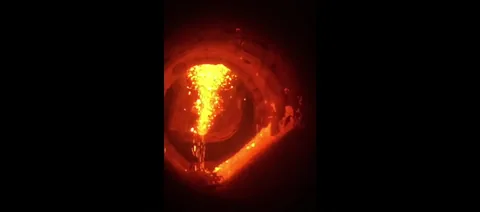
The flagship sintered mullite aggregate from Ellite Materials — high-alumina, high-refractoriness and kyanite-derived, produced at the Bangalore plant on a dedicated sintering line. Captive raw kyanite is calcined and sintered under a controlled profile that drives full mullitisation, carries the volumetric expansion event off-site, and delivers a dimensionally stable, phase-mature aggregate ready to enter a refractory recipe.
Chemistry sits on a high-alumina base with low iron and titania. Phase assemblage is predominantly mullite with controlled residual glassy silica. Bulk density is controlled and apparent porosity kept low through the sintering programme.
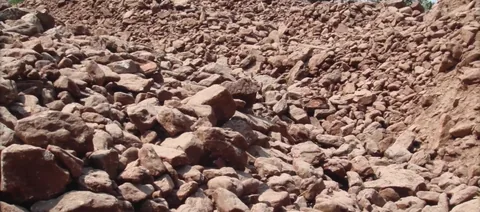
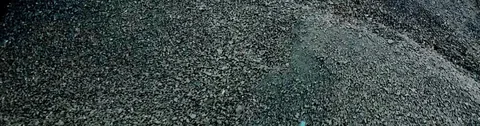
Our refractory-grade kyanite line — high-alumina, low iron and titania, drawn from single-source captive reserves. Kyanite is added to a refractory recipe for its controlled expansion during firing — the in-situ mullitisation counters shrinkage in high-alumina bricks, plastic refractories, castables, ramming masses and mortars.
When the finished product depends on that expansion behaving consistently between shipments, the source of the raw mineral is a specification concern in its own right. Bajaj Ceramull holds chemistry lot to lot because a single technical bench controls the mineral end of the chain.
The refractory chain begins in the ground — and we own it there. Single-source kyanite reserves feed the raw-material line at the Bangalore plant, which is why the chemistry of Bajaj Mullite 60 and Bajaj Ceramull holds lot to lot, campaign to campaign, and formulator to formulator.
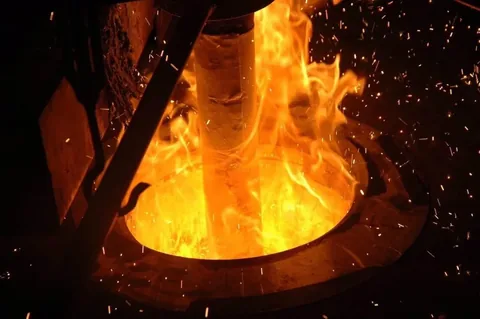
High-purity SiO₂ that has been melted and quenched to an amorphous, vitreous phase. Fused silica is specified wherever thermal shock resistance and dimensional stability under cyclic heating dominate the refractory selection. Its very low coefficient of thermal expansion allows repeated heating and cooling without cracking.
Investment-casting shell prime coats, thermal-shock-critical continuous-casting refractories and thermally cycled refractory concretes are typical service points. Devitrification behaviour is matched to service temperature and firing schedule during grade selection.
We reply with a Typical Chemical Analysis sheet, PSD report, phase-analysis records where relevant, and evaluation samples in the customer's preferred grain-size fraction on request.